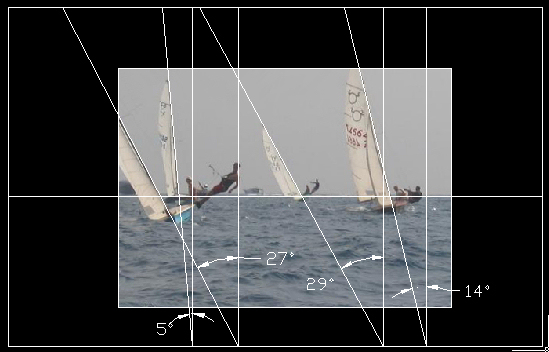
What angle tackle the subject?
In terms of navigation, we have only two dishes to consider:
- The roll attitude, The
- pitch.
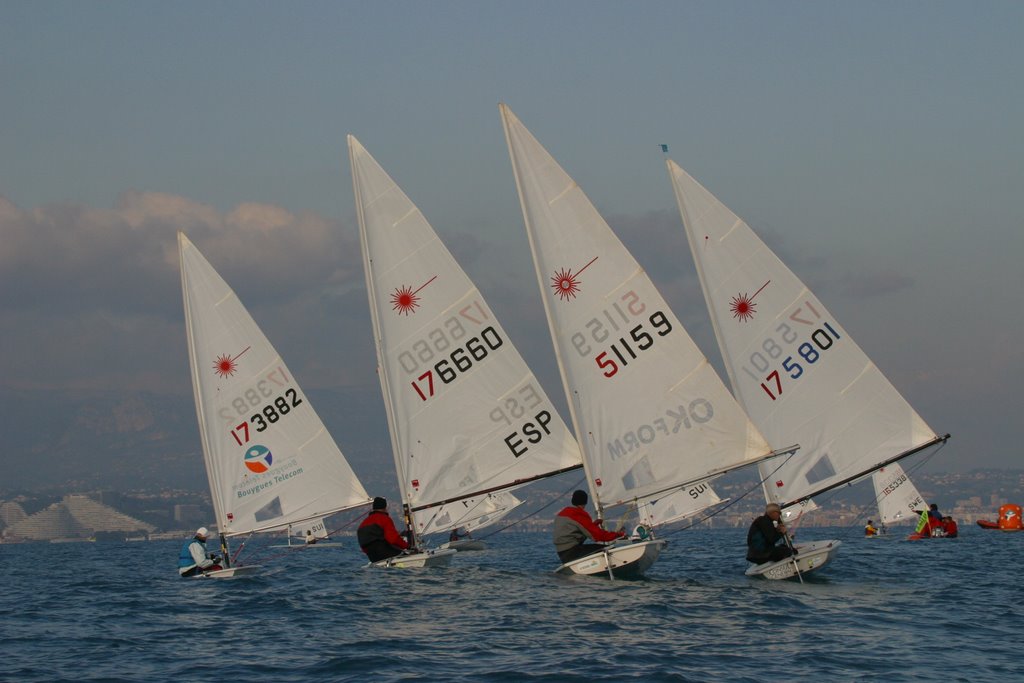
is the balance between the running resistance of the hull and the propulsive force of the sail-cons who control the house forced downwind for solitary rig catboat
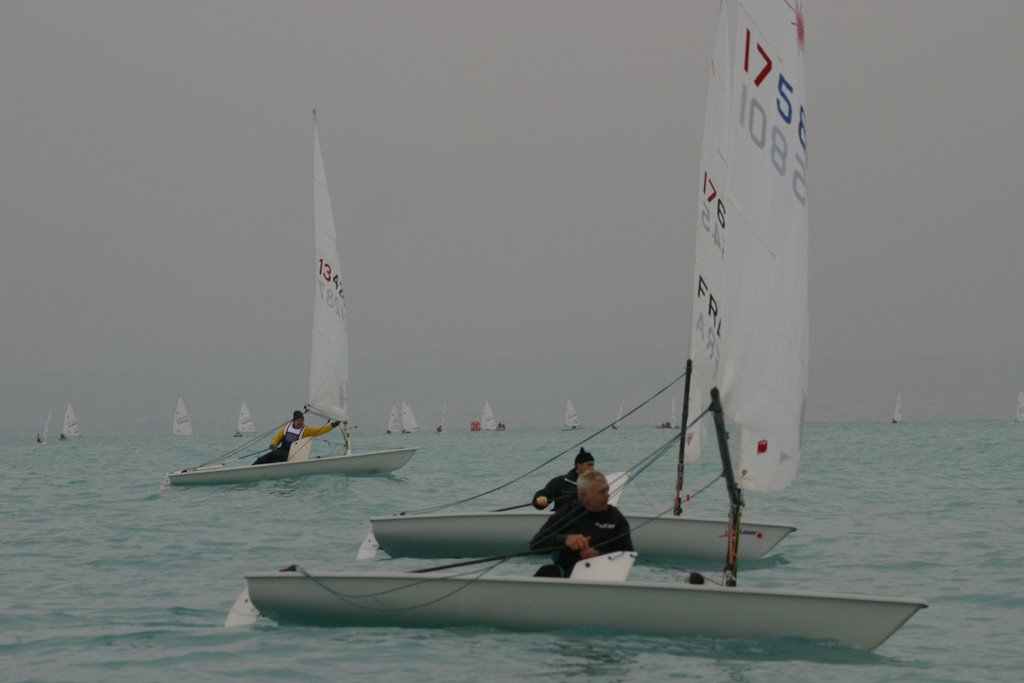
While lying on the water, hull of this laser offers minimal resistance to the advancement
lateral plate
It is the inclination boat in a direction perpendicular to operate the vessel.
The boat heels it leans toward the leeward side and is the most frequent case.
Otherwise, it is called cons-house or cottage cons. This potential is specific to the dinghy because of active reminder of the crew.
The effects of the list
The effects of the list are many. These include:
- Imbalance of water lines,
- Destabilization system drivers (veils) and resistant (hull),
- Reducing sail area projected onto a plane perpendicular to the direction of the wind, similar
- Reduction the projected area of the drift plane on a vertical plane parallel to the direction of the boat,
- Modification of the effect of gravity on the sails,
- stress generated unconsciously to the crew.
Except in situations outstanding, these effects are negative on the progress of the boat, which leads to the following situation:
dinghies to navigate the rule is "flat boat", that is ie without any shelter.
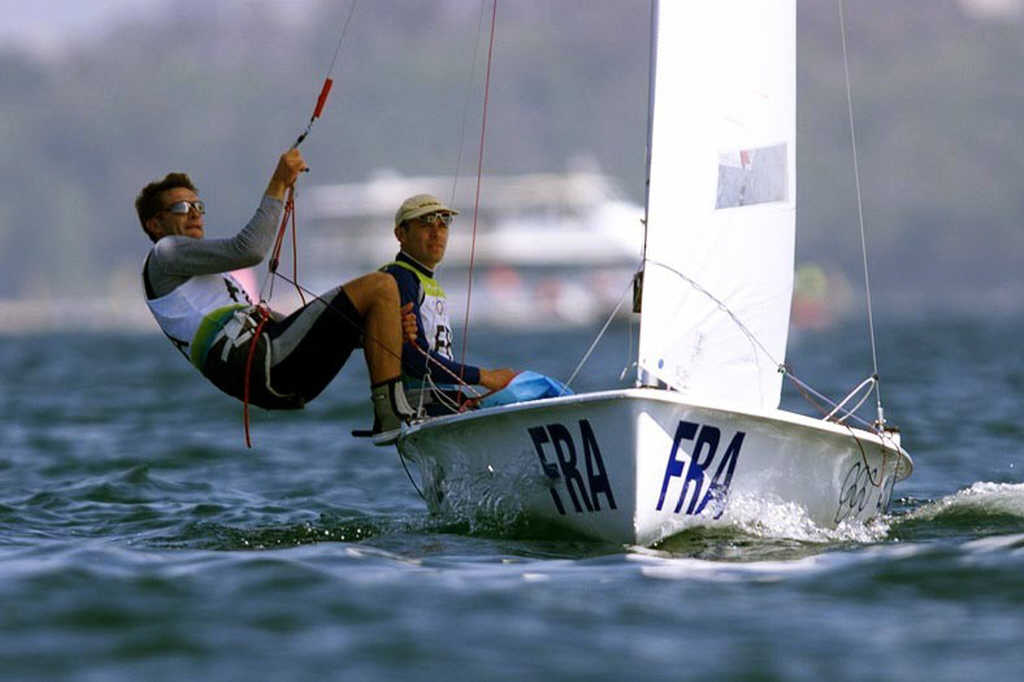
The Sydney Olympic crew is governed by the same laws as all other

Any other situation should be only temporary and exceptional, experienced or voluntarily decided.
Small inventory situations where a slight list can be searched
Setting the boat led to be a little soft (tendency to break down) under certain wind conditions. Giving a the boat heeled slightly helps restore a balance without having to constantly correct the course with the bar (but the boat might require a change in its settings).
The skipper wants to luff. He then has the choice between giving an angle bar or heel the boat to leave to start his aulofée naturally, the combination of both actions is the most frequent case.
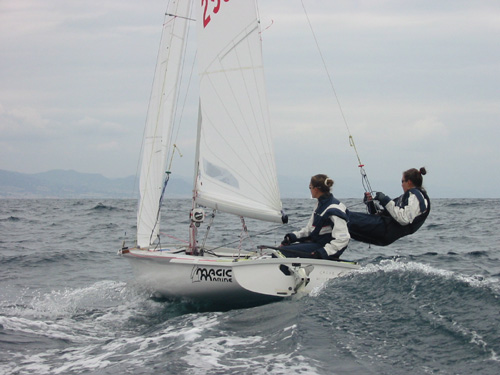
Here, the opposite effect is sought.
Ingrid PETITJEAN-cons imposes a slight heel to his boat and went gently swing
The wind is very low, the sails do not come into form in the wind (they hang miserably, and this situation does not permit the establishment of a laminar flow of air around the sails, no propulsive force is to be expected). The making of heel the boat can sail in some cases to take shape under the action of their own weight. The sails have their shape and do more flying, the slightest movement of air can be propulsive.
We are downwind with very little wind, the boat is right, the sail hangs miserably, because partially masked by the mainsail.
Giving a cons-heeling the boat now opening up to the sail by pushing the boom allows the spinnaker to deploy the side opposite the mainsail under the effect of its own weight and react to the slightest movement of air.
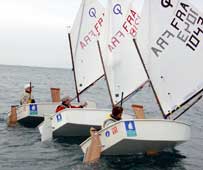 For the lonely, the cons-heeling to leeward will restore the balance between driving and resistant forces.
In some schemes waves (pronounced chop) the portion of the hull against the waves can be tricky and the boat may tend to type. The crew then tried to give a slight list to the boat to see if it goes more smoothly against the waves.
And you know of other situations and other motivations driving team to play with the house?
Uh, yeah, I need to pass under the bridge, the top of the deck is lower than my head Mast. Give a heel of 30 ° will reduce my boat clearance of over 13%.
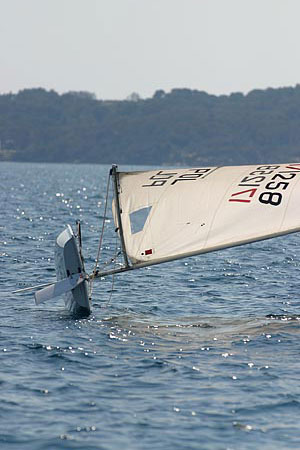
Counter-heeling exaggerated, the helmsman is no longer on board.
Besides, where is it?
pitch
The boat well within his lines must not bind its ends in water, nor his bow or his transom.
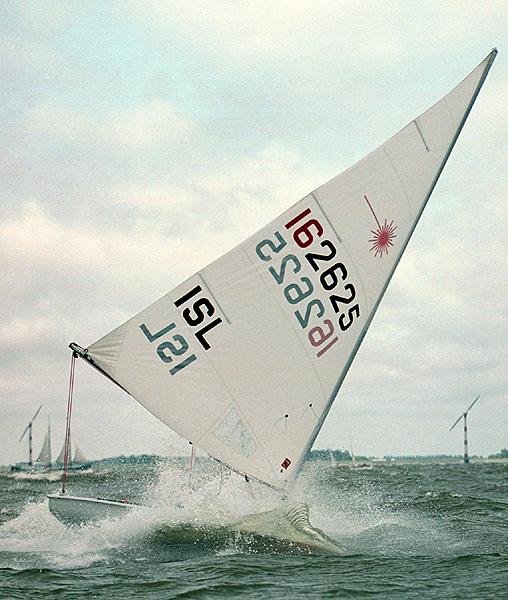
The whirlwind raised by the bow of this laser is a harbinger of an imminent charging. Attention daredevil ...
The most common mistake among beginners is to overload the rear. The open cockpit to the transom very common on dinghies seem an invitation to step back on board. It is a mistake. In all circumstances, the helmsman must stay ahead of the bar under penalty bind the leg during movement bar.
All manuals for introductory sailing cite these rules:
- Charge ahead in the little time to clear the water surface rather flat behind Hull,
- Getting back in the breeze to promote planning and to avoid the risk of charging.
The reasons given are:
In light air, the running resistance of the hull is mainly the friction of the hull on the water. We need to reduce the wetted surface. The front of Hull, narrower and more rounded than the flat shapes of the stern, provide an equivalent lift (the weight of the boat and crew) for a smaller wetted surface.
In the breeze, the friction parameter of the hull on the water becomes secondary. Is the wave generated by the passage of the hull at high speed in the water that absorbs energy and slows the boat.
The crew then searches the slides and tries to achieve this altered state that is the schedule. The boat glides over water without sinking it. The flatness of the back in favor.
All this remains true, but what is noteworthy are the limits beyond which he should not venture. Everything is in the shade.
Load forward is done without excess. For the 505, the forefoot (marked angle between the line of keel and the stem) should never be submerged, except perhaps in very little time (or almost no wind).
Upwind, downwind, but also relieve the bow of the water is just necessary. A boat pitched up, even if it is spectacular, is actually idle. Here comes the value of having good mobility of the crew to dynamically control the pitch of the boat.
In the wind when the boat pitched up, the crew moves forward, while remaining on the trapeze, to bring the front of the hull at the water's edge. The crew then feels the acceleration and crew may fall again.

Although beyond the crest of the wave, this boat remains artificially pitched by its crew too remote.
It is time for the crew to run to the guy to lower the bow and allow a significant acceleration to leave back then it was to present a risk of charging.
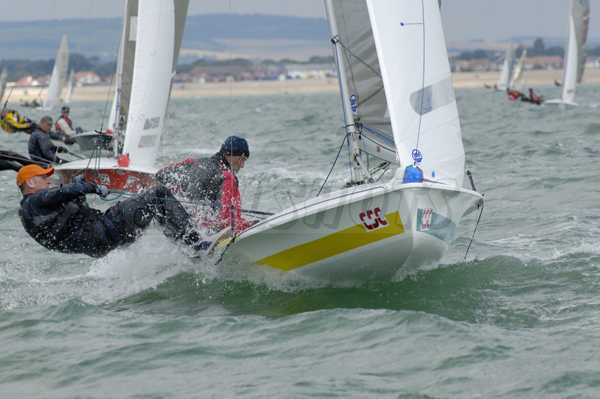
This boat is pitched too. It feels like climbing a hill at all times.
It might be time to go down the coast, and thereby accelerate.

Once gone, the boat is flat and it goes very quickly.
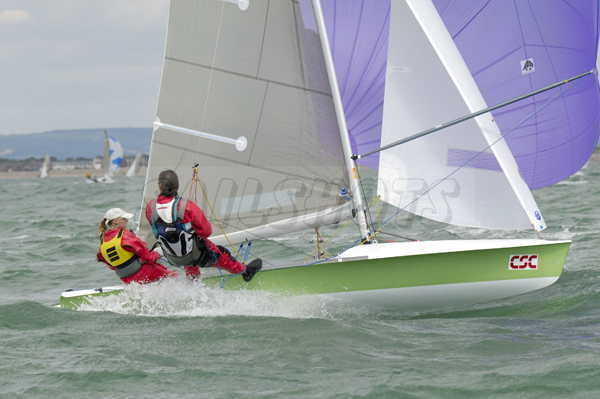
Madam ensures the bar.
Sir, absorbed by the observation of the water and position tactics of opponents, temporarily neglecting the search for optimal adjustment of trim.
But how to control the plate?
It returns the crew to control the attitude of the boat, its placement on board, mainly in the small time, and the production of an effective recall and adapted in the breeze.
Two situations are considered which generate different reactions from the crew.
- Situation 1: The vessel is under-powerful
- Location 2: the boat is overpowered
The boat is under- powerful in light winds when the maximum of power generated by an optimized sail trim can be balanced by the return of the crew.
For the 505, as for most dinghies, this state corresponds to a range of wind strength from flat calm to Force 2 or the lower strength 3 for the heavier crew.
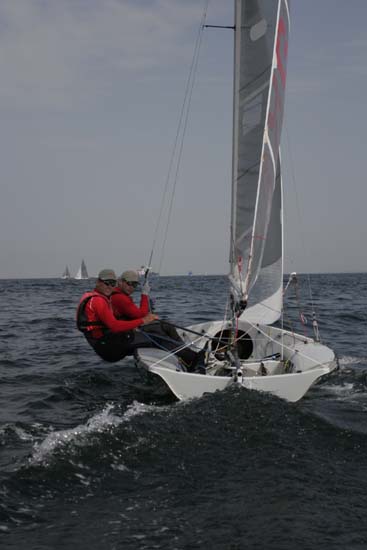
flat sea, flat boat, boom in the axis, sails slightly twisted, helmsman and crew to return in the straps, this picture is an illustration of a typical situation of under-powered navigation.
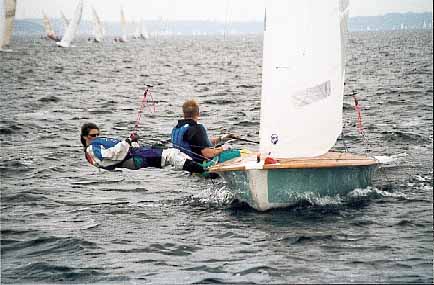
This boat sails well under-strength. The side dish is perfect, left under the control of the team member, the coxswain took the opportunity to assess the overall situation on the water.
Although calm can be a nightmare for a crew that wants to move forward at all costs - But it's also a time of relaxation on board - this range of wind strength is in general very pleasant.
When the wind blows a little bit, the ship is alive, evolving and fully controlled by its crew.
should adjust the sails so that they develop maximum power and cons in part, the crew will produce the return just sufficient to keep the boat flat on the water, or slightly heeled if This is due to a technical choice on the part of teammates.
If the wind strength a little, the recall will be more intense, just to keep the boat on its lines.
The wind dies down, the reminder of the crew will be reduced accordingly.
boat as powerful, the sails are set to develop maximum power, the crew, but especially the crew module, its reminder to keep the boat flat.
The boat is overpowered , once the crew is unable, despite a reminder maximum of keeping the vessel developing its potential power right on the water.
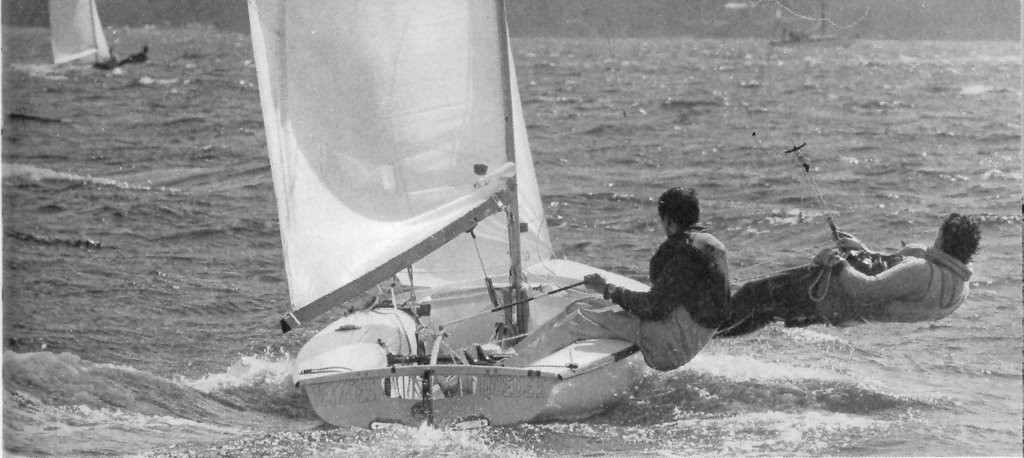
The reminder of this crew is maximal. To keep the boat flat, the helmsman opens wide the mainsail under the control of the mainsheet.
Note in this picture the end of the boom on the outside corner of the transom.
should then be permanently maintain the maximum return position mentioned above and reduce the power generated by the sails by appropriate adjustment thereof.
I leave aside the so-called static settings (which is affected only rarely) to get interested in dynamic settings in which it operates continuously.
Basically, two techniques lead to the reduction of the power of the sails, also the settings of the actual shape of the sail (sailing hollow sail flat), mast rake, the position drift which are not addressed here:
- A greater opening of the sail plan relative to the axis of the boat, this opening may be global, as it opens a door, it changes the steering sails, or it may vary depending on the height of the considered point of sailing, then this is the particular twist to the mainsail (the top of the canopy is more open than the bottom). The twist is controlled by the boom vang or combined action on the large-listening and listening bar if it is present on the boat,
- A variation of the boat's course can lead to partially obscure the front of each sail, thus reducing their power. We talk about piper in the wind. This technique may seem effective because it allows for a course closer to the wind while helping to achieve our goal of reducing the power of the sails, but it also has its limits it should not be exceeded because there is a risk of stop the boat that will be hard to get going then.
The choice between the two techniques is often guided by reasons of tactical or strategic.
I may need to optimize my cap to position myself favorably against an opponent.
I may need to speed at the expense of the Cape to escape the control of an opponent in the wind.
On the windward end of an Olympic course, I may need to pass the course to the windward mark without tacking extra.
If, during the upwind leg, I'm already on the lay-line, not simply giving the course, which would lead me too high in the wind against my goal, only the speed account.
navigation against the current requires a maximum point in the wind, this mode of power reduction sailing that I adopt.
The portion of the boat against the waves is better suited to a particular angle of attack, I adapt my type of operation accordingly.
can cite an anecdote, dramatic settings of the power of the vessel by the use of the sails of small area (remember windy where output Marcel BUFFET gréait a small sail on its 505).
The Australian Competition 18 feet (but the concept of 18-foot walk-way fishing has not yet been invented) of the wealthiest teams have 2 or 3 sizes of rigs (masts, rigging, sails ).
course, it must then make a difficult choice and irreversible before leaving the water. The frequent lack
worth avoiding:The crew is great reminder, the sails are open wide to keep the boat flat. The boat covers an area less ventilated and crew compensates by reducing its recall.
error, he should have started by bringing the sails to the axis of the vessel to compensate for the momentary loss of power while remaining in great reminder.
overpowered boat, a reminder of the crew is constantly exceeding the crew, but especially the helm, the power module of the sails to keep the boat flat on the water.
Well, if now, on the water, you do everything what has been stated here, it will have very, very well.

For the new generation of Australian sleds (skiffs) with lateral scales, a lax in controlling the roll attitude is immediately punished by engaging in water wings.
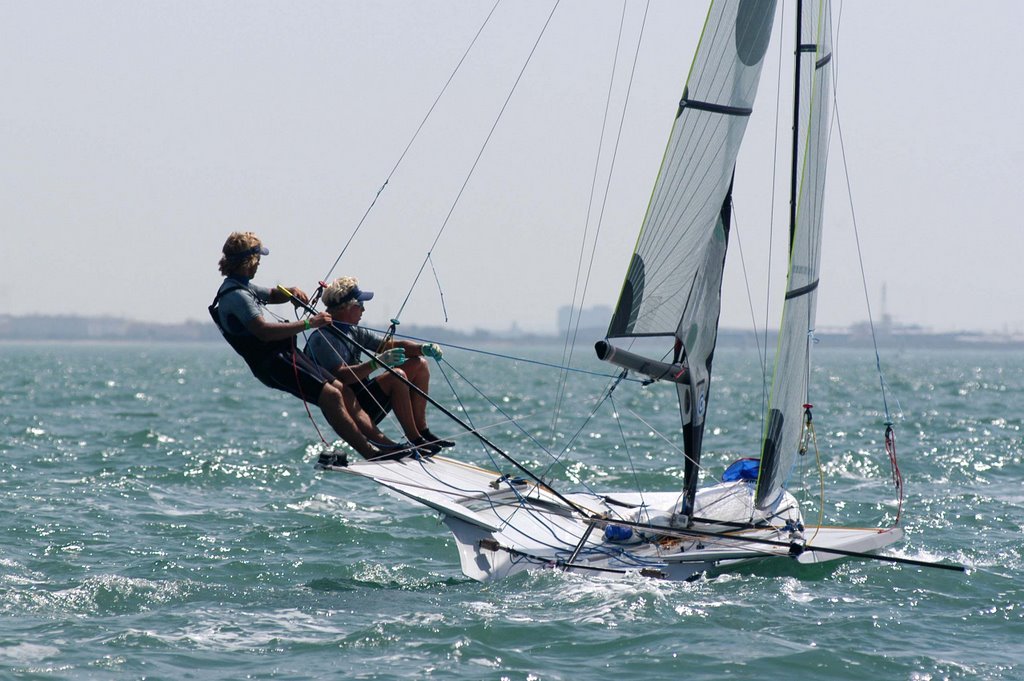
Solitaire, double, three crew, the concept of the narrow hull with wings or scales is reproduced identically.

Can you imagine this 18-foot Australian launched at high speed with an angle of heel of 30 degrees?
The overall balance would be greatly compromised.
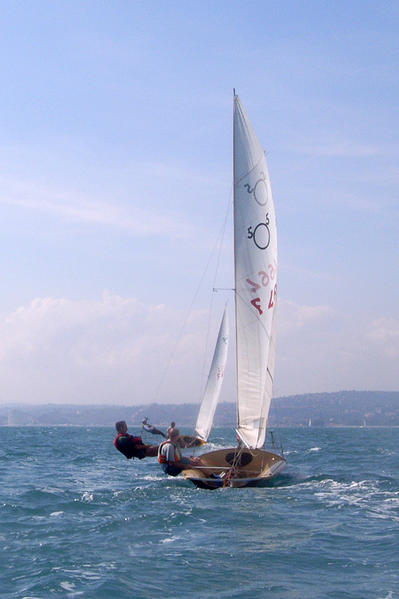
Sailing hollow, twisting important to the mainsail, boat flat, the pace is steady and convincing performance.
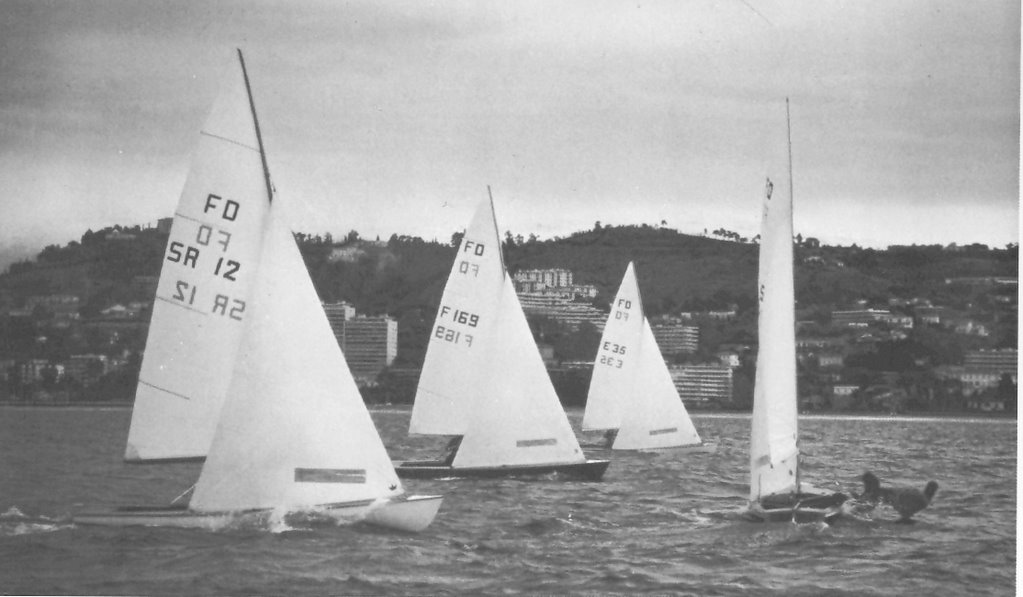
Rights as i sail fully lined, all parameters are optimized for speed close hauled.
F The FD 169 is the boat of brothers Yves and Marc Pajot.

Producing an effective recall, the helmsman of the Finnish laser keeps his boat on flat water.
If the wind rises again, it becomes necessary to flatten the sail downhaul on the border.

The right boat is ready to accelerate even if the joke is increasing.
This is not the case of the three boats left that interfere with each other and do not have any latitude to negotiate the gusts.
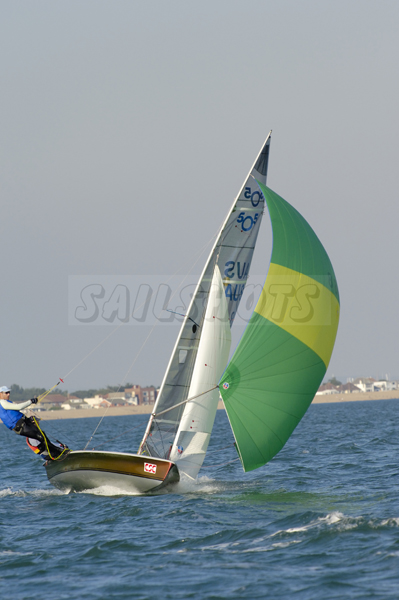
The embarrassment of this crew is visible on the image.
The lack of responsiveness, even anticipation, of the crew led to an excessive deposit that does not allow the boat to accelerate in the gusts.
The strange profile of the mast is certainly the result of a hasty adaptation of the hardware "big spinnaker" not provided on the original rig.
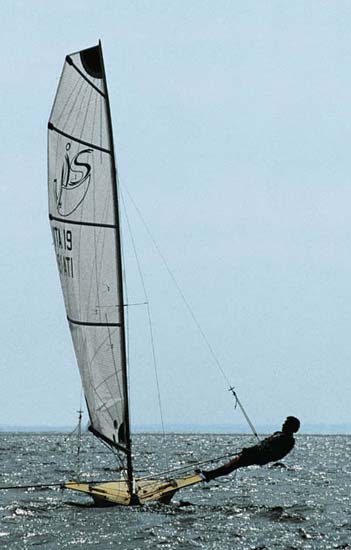
design dinghies "new generation" leaves no possibility of excessive heel.
commitment scales outside the hull would be a brake, causing a significant imbalance sudden the boat.
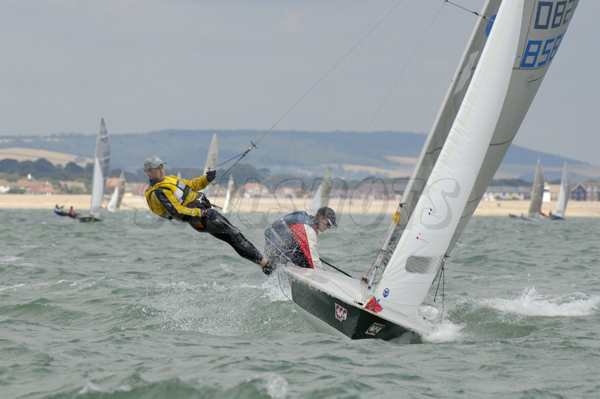
The coxswain is preoccupied with settings that would allow him to gain a few 1 / 1000 speed.
He dives in to catch his cockpit controls, forgetting to adjust its settings and dynamic at the same time putting his boat in a delicate situation.

It is quite another for helmsman who tinker inside the cockpit while maintaining an excellent side dish.
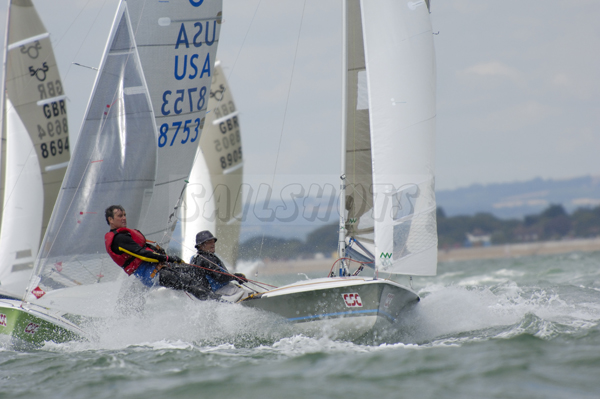
right boat, this crew has the situation well in hand.
The boat, although flat on the water, is launched as an aircraft, the crew was in office and control the situation. The mustache
symmetrical right and left of the bow is a good indicator of speed and stability.
The only thing that could happen to this ... helmsman is to see his hat fly off to the next burst.
The American boat to the right of the picture seems to trouble him in passing. He suffers from a lack of crew coordination. The crew, who saw the house rise, has already shocked the jib while the helmsman he has not yet responded: the mainsail too bordered only contributes to the imbalance of the whole.

Similar situation with the same effects for the other U.S. crew.
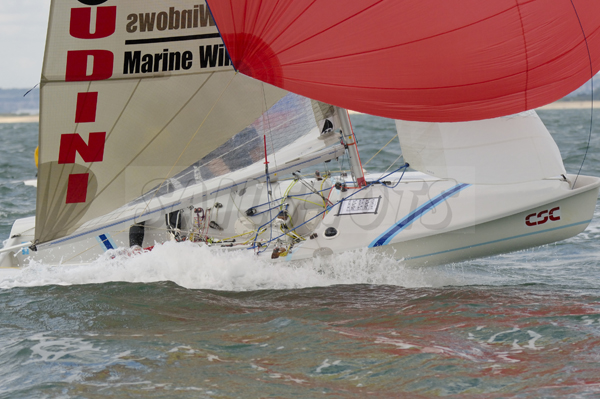
Very spectacular photographer, this must however be considered risky in terms of navigation. If the crew does not disunited, everything should return to normal.
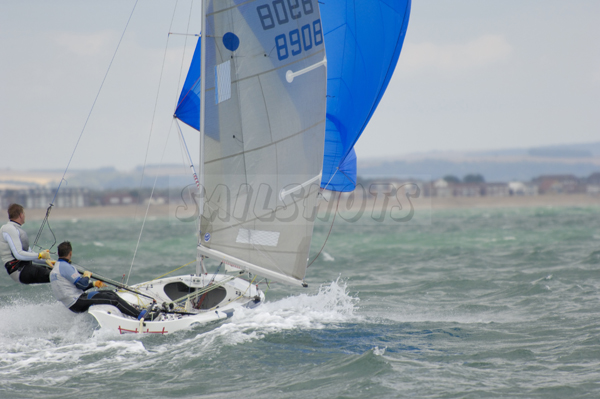
Everything's fine, I would even say very quickly, for this crew that controls the situation masterfully.
Helmsman and crew seem serene and ready to take advantage of any developments.
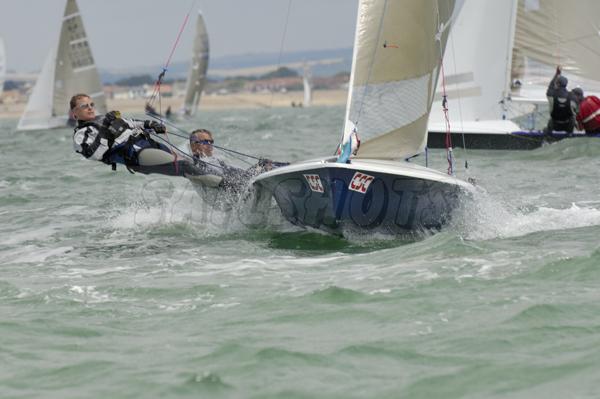
On the water, the speed it feels (question of feeling) in the photo, it shows.
Hat gentlemen!

When you are told that if the boat is not flat, it does not advance.
At this stage the helmsman can let slip the entire length of large-listening he wants is the boom brought in water that keeps the mainsail closed.

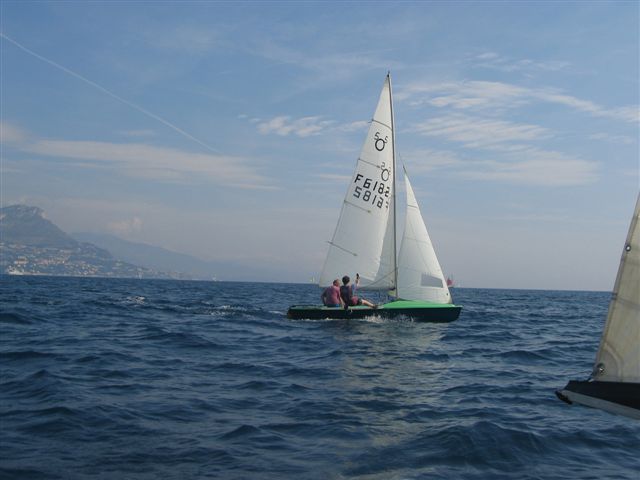
To ensure its position on the trapeze, the crew removes their legs widely.
Its position seems more stable.
This however has several drawbacks:
- As the giraffe spreads its legs to bring his mouth soil despite its long neck, the crew on the trapeze with legs spread its center of gravity closer to the axis of the boat . Thus
- camped on the gunwale, the crew has staked everything on his own stability, from write off the longitudinal mobility that allows to go even further in search of speed.
- What we say about the aesthetics. We want dancers, acrobats, tightrope walkers at the end of our rope trapeze, not weightlifters
-
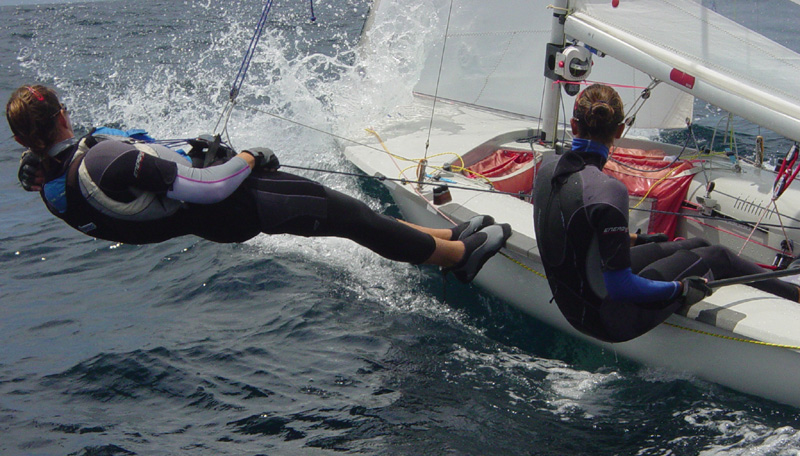
An example to follow?
Nadège DOUROUX Ingrid PETITJEAN and the trapeze bar to have the Olympic class
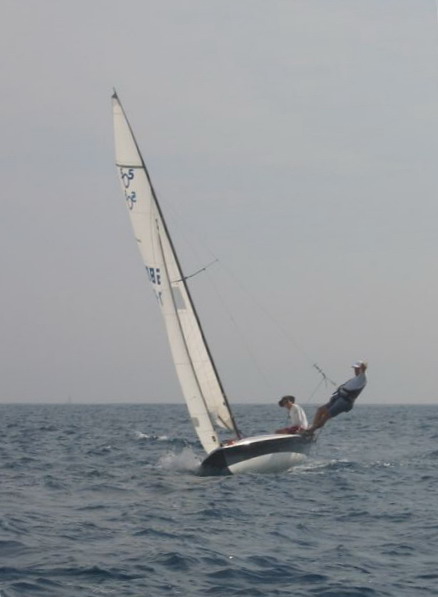
It might be enough to skipper out of the bottom strake to rectify the situation
Sailing, a hobby, but also a sport ...
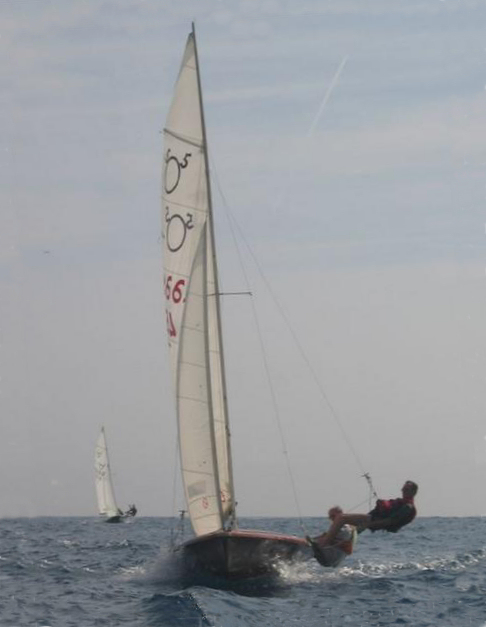


Crew hurt in coordination. Once I deposit, once I go to cons.
I swing
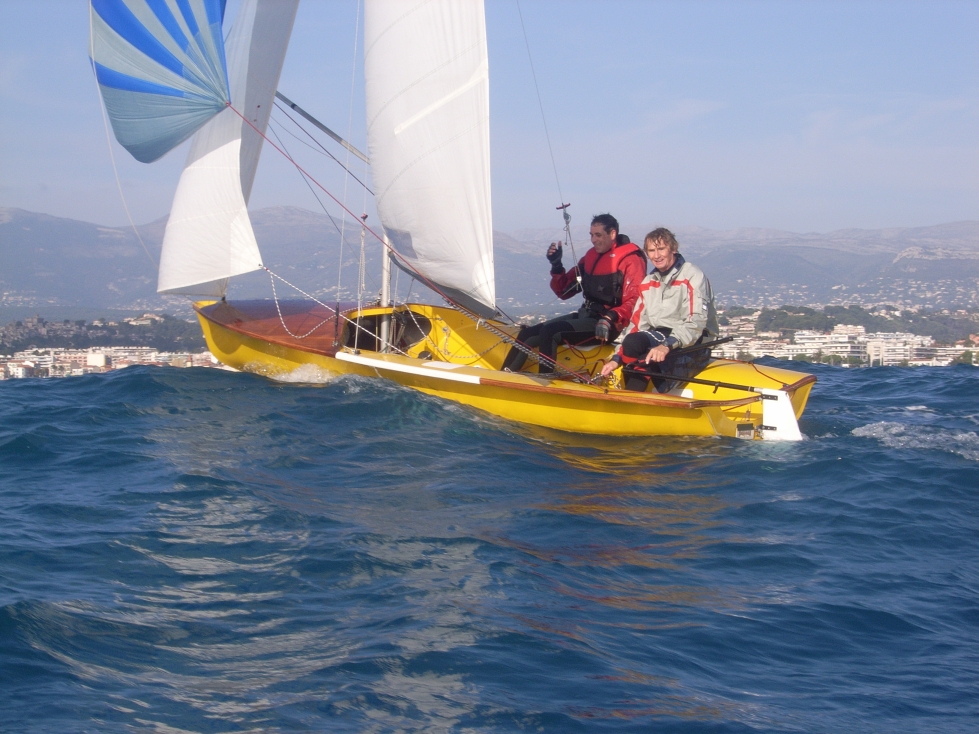
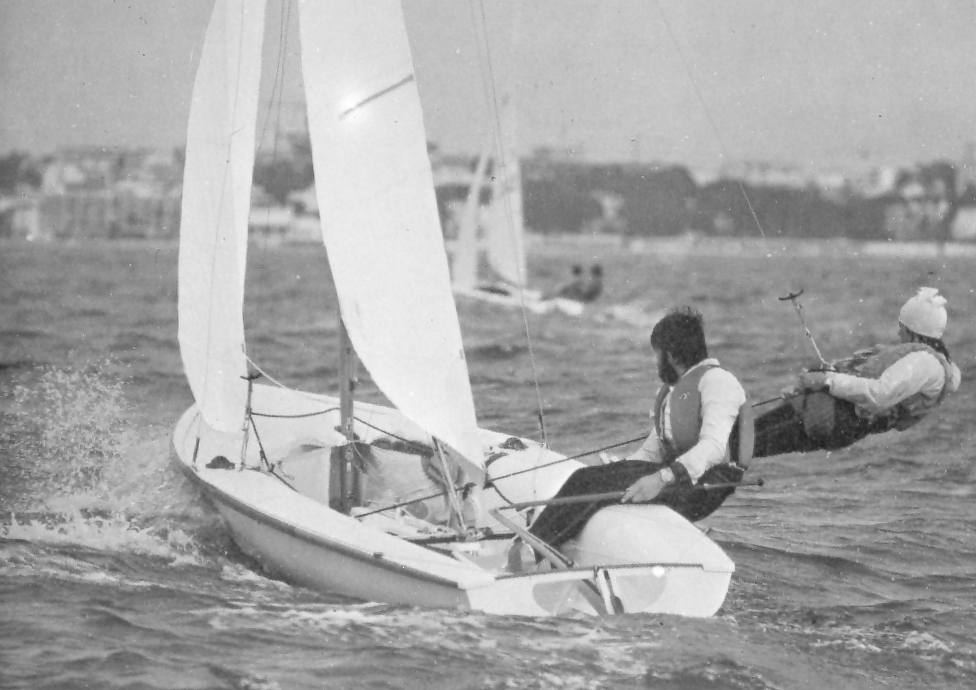
A beautiful example of maturity: Jean-François Fountaine and Claire in their works

After 100 kg, a crew of 505 laughs at everything!


