Tuesday, January 24, 2006

Japanese Train Chikans

Fair Games and Culture Children's Literature Mathematics

A wealth of ideas, a free exhibition not to be missed!

Site Lounge: http://www.cijm.org/

The next exhibition will be held for 3 days during the festivals of the Ascension, Saint-Sulpice in PARIS VI arrondissement.

Litle Models Nn Sleep


"The history of numbers from zero to ten," Vivian French and Ross Collins , Gauthier-Languereau

We use numbers every day, anywhere in the world and are a true universal language. From zero to nine, they are only ten, but they allow us to solve all mathematical problems imaginable!
Where are they? And how were we, before the appearance of numbers? The penguin and his pals will answer these questions - and many more!
They returned from a trip that transported more than 28 000 years back in the days when men began to try to measure time. They went to South America and Africa, Babylon, Sumer, in Arabia, Europe and India, and attended the discovery of the radix and the principle of position. More exciting still, they have discovered the importance of nothing! (To understand, you just have to read this book!)

A book on the history of mathematics interesting but not easy to use with students ... If you know of others on this theme, thank you m 'know.


"More stories pressed," Bernard Friot pocket Milan Junior (under new: Mathematics)

can find the text of the new one (page 16):
http://www.ac-reims.fr/ia08/rethel/documents/testcm22004.pdf
It contains a lot of calculations "crazy" to do. This is a child whose mother is a math teacher, who in retaliation for a harassment Mathematical daily engaged in some calculations derogatory to mark the anniversary of his mother.

I would strongly advise to "stories squeezed" by Bernard Friot (4 volumes) as a whole. These new stuffed humor are an excellent support for work in French.


"An elephant it matters much, "Helme Heine Benjamin Folio, Gallimard

That account each morning with so much attention and pride that elephant? He has these "nice round beautiful packages" that are his droppings. For fifty years, his birthday, he makes a shit again, but during the next fifty years, it will not bring himself to see happen on each anniversary of that shit less, to ...
It will be understood, there is, again, very far from a classic book! Philosophical tale in which death is looming quietly, book of account as we want to compute the number of droppings made by our elephant throughout his life ... we all take as he pleases, but it would be a shame not to meditate.


"1000 thousand million," David M. Schwartz and Steven Kellogg, Circumflex

you an idea how long it would take to count to one million? or up to one billion? or up to one billion?
and if a billion children could climb on top of each other, you imagine how far they could get?
Well those are the kinds of questions about the large numbers that are asked in this book and there are at least an answer ...


"The Magic Pot - a mathematical adventure, and Mitsumasa Anno Masaichiro, Pere Castor Flammarion

looks like a book to count: one island, two kingdoms, 3 mountains ...
but when we know that there are 10 pots in each of the 9 cases of 8 chests of 7 parts of 6 houses in 5 districts of four cities in the three mountains of the 2 kingdoms of the island ... We are no longer all in the simple count! To the delight of teachers of math, here is a very good illustration of the idea of factorial
"The simplicity of a nursery rhyme, the charm of nesting dolls ..." announces the back cover ... but it is better to read with children a little older!


"Ten little friends move, Mitsumasa Anno, The School of Leisure

Collection of 10 elements:
- while the collection of children who have already moved believes that children who remain decreases course;
- no text;
- no number;
- instructions for use at the beginning and end of the book;
- beautiful graphics, houses whose windows are cut.

Cocktail Dresses You Can Wear Flats With

textbooks


"Problems for the round 3-Math, a tool for understanding the World" Apple Michèle and Dominique Valentin Hatier

Digest situations developed from reality and need of treatment of mathematical order. Help students realize that mathematics is not only "school", they provide insight into the world without being a professional mathematician, and answer the question: "what good is math?" This bank problems are classified by themes: animals, travel through time and space, planet, body, time, family history, sports and recreation, and puzzles "who seeks finds."


"Discovering the world with mathematics - Situations for small and medium section" and "Discovering the World with Mathematics - Situations for the large section (the book + student activity and equipment for the class) Dominique Valentin in Hatier

situations experienced and clearly described for the knowledge news: structuring of space, shapes and sizes, quantities and numbers, and develop transferable skills such as learning to look, ask questions, organize the results ...


"digital learning and solving problems" in team ERMEL Hatier (grades GS, CP, CE1, CE2, CM1, CM2)

Ermel The collection is a series of books that result from Many years of research and experimental work by the team teaching mathematics NPRI on number learning and solving problems. This book is aimed at both teachers and trainers. Apprenticeships are treated according to the numbers, the numeration, calculation and the resolution of problems. The first part is devoted to the explication of the theoretical and didactic choices that underlie the proposals for education. Each topic is then addressed mathematics from two points of view:
- explanation and justification of choice of teaching seen in a historical perspective;
- annotated description of activities and their implementation, based on experiments conducted in classes for several years.
Proposals experienced teaching, based on:
- the progressive appropriation of digital literacy through problem-solving situations;
- the exploitation of student productions and discussions arising therefrom;
- strengthening and regular reinvestment of learning.


"Special large N - Starting Points' activities and math problems for students in primary school (Cycle III) and the college, IREM de Grenoble

can be ordered by printing the voucher command that is there :
http://www-irem.ujf-grenoble.fr/new2006/revue_n/Documents/BondeCommande.pdf
Over 50 problem situations for Cycle III

It is both:
- starting points for students with exciting and challenging activities in which they will undertake with pleasure
- but also starting points for teachers who may find material to enrich their sequences of lessons, covering certain aspects, modifying them, finding their students with possible extensions.
Each point of departure is accompanied by a commentary which explains his interest, says the choices made by editors and may propose some extensions.


"The number system - remediation activities in mathematics," Marc-Olivier Roux, EAP

The overall objective is to give children an overview of the number system and the help build a mental count of organized ...
Hence the use of graphic and symbolic helping to build and use knowledge. The

aspects covered include:
- Reading and writing numbers 1 to 100 and then from 1 to 1000.
- Ownership of the number system and its operating rules.
- Training on the counting and calculating thought.
- Using the numeration for mental arithmetic.
- Number sense in ordinal and cardinal aspects.
- Order Relations within the numerical sequence.

Another way to approach the system of abstract numbers with boards - containing some 1,000 items grouped by tens and hundreds are very valuable to rework count with students in difficulty or after handling (see article on swarming), or to prevent manipulation with the greatest.
What Is Some Good Mature, Harem, Ecchi Manga?

Some interesting websites


Puzzles, problems and challenges:

http://www.recreomath.qc.ca/
http://www.ac-amiens.fr/pedagogie/associations/adcs
http://membres.lycos.fr/croco/PROB / enigmes.html


puzzles and puzzles to build:

http://www.archimedes-lab.org/atelier.html

Thursday, January 19, 2006

Gay Cruising Areas In Dallas

Rectangles

Level: CE2 - CM

Cut out the pieces and reconstructs a rectangle.


Search All different solutions.


worked Skills:
- to good use the following vocabulary: triangle, square, rectangle
- draw geometric figures
on graph paper - describing a figure to identify a batch of figures
- exhaustive search of all possible solutions to a problem
- organization, classification of solutions to verify and prove that they were all


procedure possible:
- each student cut parts and is a rectangle
- discussion of productions obtained: which are rectangles? Getting clear about the characteristics of a rectangle (a square attention is also a rectangle!)
- each student seeks different rectangles as possible using its parts and draws on a piece plaid
- working in small groups the students cut the rectangles found and the pool by eliminating duplicates (once cut, they can rotate in all directions and really look )
- each group sorts the solutions he has found and then searches those who could miss
- pooled at the classroom level

This problem is much more complex than it seems, try and see ...


Extension possible:

Make students make 16 squares bicolor like this on board (excellent exercise in geometric construction!)

Search all possible assemblages of 2 squares, then all of those 4 squares (assembled to form a large square).
With this situation we can work on symmetry.

Wednesday, January 18, 2006

What Should Discharge Look Like Prior To Period?

dictionary

Level: CE2 - CM

Xavier is writing a dictionary. His publisher told him:
- When you deposit your manuscript, I'll give you an advance. It will be based on the number of pages of the manuscript.
- That is to say?
- I'll add all the numbers that were needed to paginate your manuscript. This sum corresponds to the amount of the advance in euros. For example, if your manuscript has 20 pages, the amount of the advance would be: 1 + 2 + 3 + 4 + ... + 9 + 1 + 0 + 1 + 1 + 1 + 2 + 1 + 3 + ... + 1 + 9 + 2 + 0. That would give you 102 euros.
When the manuscript was finished, he had 599 pages. Xavier
How much did he get his editor?


References:
We find this problem and many others on the site http://www.recreomath.qc.ca/ under "Challenges"


worked Skills:
- involving oral and written descriptions of numbers
- calculate sums of integers
mentally - to organize and process additive calculations
long - make good use of his calculator


procedure possible:
- reading the statement, discussion around the understanding of the method used to calculate in advance
- check with what has been understood that there are good € 102 for the 20
first pages - calculation of the amount corresponding to the 20
following pages - search for a possible organization to carry out research (methods, work allocation)
- final addition and verification of the result


Extensions possible:

We want to write all the numbers from 0 to 285. How many times will he use the number 7?


"Printer": A printer publishes a book of "a" pages. Each page is numbered 1, 2, 3 ... "a". How many digits have been printed for numbering the book?
"a" is chosen to be close to 500.

This is page 159 in "digital learning and problem solving CM2" team in ERMEL Hatier

How To Hack A T Mobile Side Kick08

tingling


Level: CP-CE1

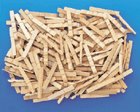
Students will organize to count more than 2000 small objects by performing groups in 10 followed by 100 and then by 1000. We can use matches, paper clips, cubes, sticks ice ...


References:
This situation is in "digital learning and solving problems" in team ERMEL Hatier volumes in PC (page 319) and CE1 (page 316)


worked Skills:
- counting and achieve quantities using counting one to one or groups and trade by tens and hundreds
- understand and value the figures according to their position in writing a decimal number
- produce oral and written sequences of numbers from 1 in 1, 10 10, 100 in 100
- involving numerical and verbal descriptions of numbers


procedure possible:
- gather students around the pile of objects: How many are there objects? How will we do to know how many there are?
- after any other attempts or parallel grouping of articles by 10 (in envelopes, with elastic ...)
- when all packages are made of 10 we repeat the question: How many he object?
- grouping objects by 100
- at this stage it is possible to count objects from 100 to 100, can be immediately or only later in the working groups by 1000
- Recovery of activity with a stock of additional objects (already grouped or not) that require to make new groupings

If students leave early in other groups as the groups by 10, we may at some point , stopwatch in hand, compare the time it takes to count two piles equivalents. The count of 10 to 10 is faster and more efficient. It is not about to let the students "invent" a system of numbers but of them into our system as it is. It is appropriate on this occasion to draw attention students about why the choice of grouping 10 in our numbering system.

Extension possible:
Treasure (CE1 ERMEL page 329): Each student is a treasure (made up of small objects called "chips") by lot numbers. He then holds a book of his treasure and organize so you always know how many chips it has. This activity will work in most of the operative technique with the addition of units, tens and hundreds materialized (ideal for "see" what happens with deductions).

Hkafo For Cerebral Palsy

Book of the million

Level: CM

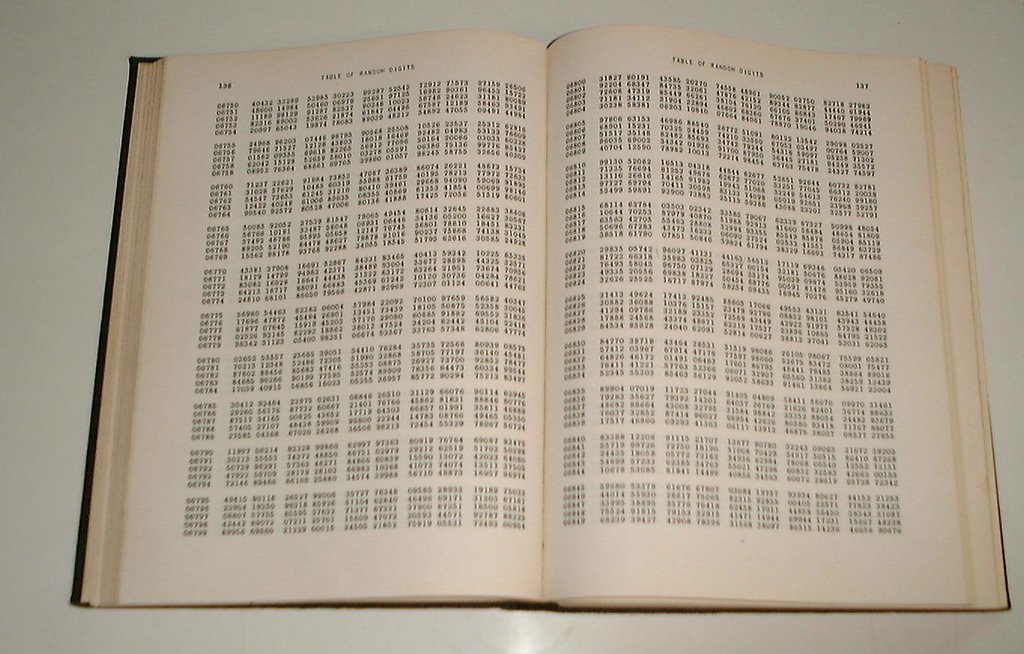
The book contains all the million integers written in numbers 1 through 1000 000 to 1000 because of numbers per page.

How many pages does this book?

References:
This is page 150 in "digital learning and problem solving CM2" team ERMEL Hatier
To work in this situation must be a few pages of this famous book. Courtesy of Marianne Frémin, a member of ERMEL team and creator of these pages, I can send them by mail to those who request it myself.


worked Skills:
- associate designation oral and written description (in figures) for the class numbers to millions
- comparing numbers, place them in a range


procedure possible:
- without mentioning the book a million, giving a different page for each student must write about
- sharing observations
- presentation of the book by the master (it contains the first 34 pages and the last)
- find the first or the last number of a given page, look on what page is a given number
- give the same page to all students and ask them to pinpoint the earliest possible on a particular number
- look how many pages the book contains one million

To view the results students can show them 2 reams of paper (500 pages each).


Extensions possible:
can find the number of reams of paper needed to make the book a billion. If all these reams were stacked on each other, the tower she obtained was as high as Mont Blanc?

In the album "1000 thousand million" there are many calculations on the concepts of a million, billion and one billion! "If a billion children were climbing over each other ... they go beyond the moon. "All calculations are explained very clearly at the end, we can remake them with students.
"1000 thousands of millions" by David M. Schwartz and Steven Kellogg in Circonflexe

Sunday, January 15, 2006

Catholic Letter For Marriagesample

congestion

Level: PS end - MS - GS as adapted
(CM2 until and beyond his normal version)

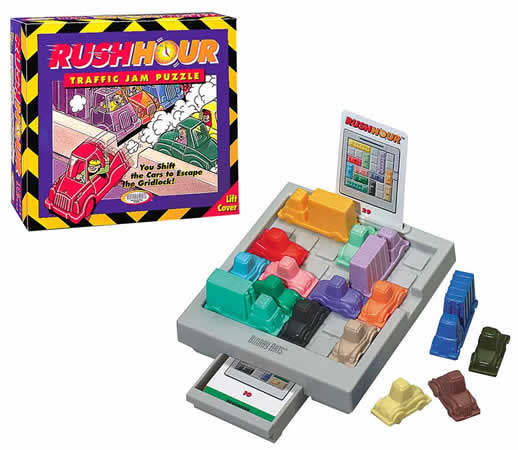
It is an adaptation of the puzzle "Congestion" (also known as name of rush hour). A red car is blocked by other vehicles, the goal is to move the vehicles to make the red car out of traffic.
maps-problems provide the starting positions of the vehicles.

can test the principle of the game by downloading a computer on the Internet (adult level!)
http://amiens5.net/maths80/groupe/dvalentin20041018/highway.exe
- Clicking the link will offer the download.
- Select 'Save' and choose a location to do this.
- Double-clicking will launch the game highway.exe
can also try this fun variation: game movers

References:
The adaptation of this game and the whole process are described in the literature following:
"Discovering the world with mathematics - Situations for small and medium section" and "Discovering the World with Mathematics - Situations for the large section" of Dominique Valentin in Hatier

The game is in didacto http://www.didacto.fr/ and awakening and games http://www.eveiletjeux.com/ for about 20 €

worked Skills:
- learning to formulate questions more rational to anticipate situations, to predict consequences, to observe the effects of his actions, to build relationships between the phenomena observed
- describe the relative positions and movements using spatial indicators and with reference to stable benchmarks varied

procedure possible:
- presentation equipment and rules
- ownership of the situation in small groups
- solving problems in the game adapted
- solving problems on normal

Extensions possible:
These works offer many other situations very rich: towers, Logix ...

Pokemon Rom For Cydia

A record rowing

Level: CM

The French Gerard Aboville crossing the Pacific solo in a rowing boat in 1991
Sailing 07/11/1991 Japan - Arriving on 11/21/1991 in the USA, on the ship "Sector", 8 meters long and 1.80 meters wide. It gave an average of 17 paddle strokes per minute, rested 10 minutes per hour and rowed 11 hours a day.

1. In your opinion, without making any calculations, how many strokes of the oar that browser he provided throughout this trip?

1000 oar strokes, 10 000 strokes of the oar; 100 000 strokes of the oar; one million oar strokes

2. Now do the math and compare with your initial response. Are you surprised?


References:
"Problems for the round 3-Math, a tool for understanding Worldwide Michèle and Dominique Valentin Apple Hatier p28 (note: there is an error on the number of days in the correction)
This book of photocopiable sheets offers many original problems for CE2, CM1 and CM2, classified by themes (animals , space, body ...)

worked Skills:
- know the units of measure time (month, day, hour, minute) and their relationships
- organize and process calculations additive, subtractive and multiplicative

procedure possible:
- set the context of the problem (which is the Pacific ...)
- ALL one estimate
- determine the stage of research one to one or trying to anticipate all:
- number of days
- number of strokes in an hour
- number of strokes in a day
- number of strokes total
- comparison of results obtained with the estimate made at the outset

Extensions possible:
from the news of Bernard FRIOT "Mathematics" in "again pressed stories" Milan Junior pocket (it can find the text of the new there) there are plenty of calculations "crazy" to do. This is a child whose mother is a math teacher, who in retaliation for a harassment Mathematical daily engaged in some calculations derogatory to mark the anniversary of his mother.

I would strongly advise to "stories squeezed" by Bernard Friot (4 volumes) as a whole. These new stuffed humor are an excellent support for work in French.

Purple Sheet Cake Designs

"An elephant that relies heavily" All fingers

Level: CE2-CM1

An elephant is a turd day the first year of life, 2 a day the second year and so on until 50 years and then decrease its droppings a day per year until his death at the end of its 100 th year.
How did he poop until 50 years? until his death?

is a theme that appeals to many students! ! !

References:
"An elephant, it matters a lot," Helme Heine (Benjamin Folio, Gallimard, 1981)
This book is no longer published but is found quite easily in BCD and libraries.

This book is described by Dominique Valentin in an article on the books as:
"That account each morning with so much attention and pride that elephant? He has these "nice round beautiful packages" that are his droppings. For fifty years, his birthday, he makes a shit again, but during the next fifty years, it will not bring himself to see happen on each anniversary of that shit less, to ...
It will be understood, there is, again, very far from a classic book! Philosophical tale in which death is looming quietly, book of account as we want to calculate the number of made by our elephant droppings throughout his life ... we all take as he pleases, but it would be a shame not to meditate. "
(You can find the full article in the magazine" Big N "No. 52 pp.11-21, 1992-1993 and there: http://www.grenoble.iufm.fr/departe/francais/livreaco / grandn.htm )

WARNING! The book has 2 mathematical errors: there is first a confusion between having a year and the first year. Then, after the first 50 years ago calculated multiplying the result by 2 to get the number of droppings until his death (and it does 50 droppings per day for the 50th year and then reverts to 49, then 48 ... droppings per day, we must multiply by 2 the result of 49 years and add the 50th).

worked Skills:
- involving oral and written descriptions of numbers (up to 800 000)
- organizing and processing additive calculations
very long - make good use of his calculator
- using multiplication instead of 'repeated addition

procedure possible:
- if students have not built the number of days in there one year, you can use a calendar, draw a poo on each day and counting (one by one, by adding the number of days each month) of course we ignore leap years
- calculate droppings made the first year and the second .... until the 50th (organize those results into a table)
- add the 50 results (the calculator by distributing the work, if a student dictates the numbers to another step that we work + + on the designations and written Oral numbers)
- watch for the next 50 years we have already calculated results (51st = 49th, 52nd = 48th ... .100 th grade = 0 droppings)
- the result is: (total of 49 years droppings X 2) + total poo the 50th year

Why Do I Have Chubby Knees?

school

Level: CP-CE1

This is counting all the fingers of the school.

References:
Françoise Paletou MFIs in the Journal of Teachers No. 9 May-June 1987 Nathan
be found in full on this article Internet there

worked Skills:
- from 10 to 10
- organizing and processing additive calculations
- count a quantity using groups of 10
- use the multiplication table by 10

History possible:
- how many fingers in the working group in the class: 1-1 count, from 10 to 10, reproduce the contour of your hands and counting ...
felt - how many fingers in the school: seek class by class and then add the fingers add up all students in all classes, ask the director the number of students School ... (you can following the ideas of different groups of students try several methods and compare results)
- if a new student arrives during work in the school it is particularly interesting to see how to take account, we must add 1 or 10? This of course depends on the method chosen and where it is ...
- during work, after several observations and inspections, using the multiplication table by 10 labor-saving and allows a final check simple

Extensions possible:
- Counting all fingers of the city, around the world (Internet counters http://www.populationmondiale.com/ or http://www.abacom.com/ pdescham ~ / natmond.html )

Problem With Battery Operated Blankets

situations


The situations described in the following articles are "math adventure" I actually lived with students .


You will find a brief description and all details required to complete them.


In addition to skills quoted for each specific situation must be added of course that these are common:

- use their knowledge to address problems
- search and produce an original solution to a research problem
- implement reasoning, articulate different stages of a solution
- formulate and communicate his approach in writing and orally explain
- check and discuss the relevance or likelihood of a solution
- identify errors in a solution
- argue about the validity solution

Should Cervix Day Before Period

ideas highlighted

To develop or finalize a work of mathematical research can be used making posters or books dedicated to a problem.

can also issue a challenge to other classes worked to solve the problem or part of this problem. Then the class study the proposed solutions are on the way students who are wrong (they then assume a position of experts), then complete a "diploma" to give to those who have found. And why

not also write an article in the school newspaper or in the blog class, suggest problems related to or even take a "stand math" in school party?

Sunday, January 8, 2006

Mono Bloating Stomach

Specifically, some tracks ... Accompany students

Anticipating the solution

It is interesting to ask students what will be the result to their opinion. This allows us to see if they have an idea of the magnitude of the result and adds a challenge to research : Who will be closest to the solution?


Do not know the answer

Why search when the master has the answer? This prevents some students to develop research ... The ideal is that the master does not know the answer to sincerely respond "I do not know" when a student asks if he "good" and thus push to check for him even its outcome. Attention, I'm not saying we should not have worked the problem before giving students the contrary, but just do not memorize or record the response (Or do not make the final calculation).


Do not validate

As the master does not know the answer either as students, we must find another way to validate the results. There occur exchanges between students, the different ways to check that can be implemented ... We must not however refrain completely to intervene, especially when they all agree on something incorrect. Is a cons-example or "I do not agree" is welcome.


Find with them

often I settle myself while students seek, seek with them, before them (err, make, think, correct. ...) helps to break the image of the problem solved by the adult or the "good student" in 2 shots ladle. To "stage" by forcing the line is just I think a good thing, it helps give a template.


The question on what they do

Question student on what he does and he knows how to do as that (why avoid blocking the exchange) is extremely instructive for the teacher. This provides valuable information on strategies and procedures of the student.
A student does not "anything" is the teacher who does not understand how he did it!


Let outstanding ...

Do not hesitate to leave things in suspense (note where there is the question), it allows students a break will allow time to assimilate things and it allows the teacher to reflect the best way to continue the search (especially useful when one is in a deadlock or to an unforeseen difficulty). In addition, each time, during the time of re-appropriation of the problem is given another chance to students who are returning in greater understanding of the problem.


Follow students

"Follow" as much as possible the students and their ideas, it is not often offer things we had not even thought of, or extensions interesting variations ... not disperse and necessarily take on all the time, it is often valuable to capture it. So must be flexible enough with the progress that was expected and does not hesitate to let them embark on costly procedures and let the experiment long enough (at least 10-15 minutes). In order that they themselves feel it is too long and he can look to find another procedure.


Use the calculator

Do not hesitate to use the calculator for students to check a result, calculations or time-consuming repetitive. It is important that they also discover that this is only a tool and its use requires precision to be effective.

Saturday, January 7, 2006

Best Interior Paint 2010 To Sell


course, propose complex mathematical situations to students (especially if they are in trouble ) must be done with a maximum precautions to prevent these students find themselves in situations of failure. Marie-Jeanne Perrin-Glorian advocates to pay attention to:

- Solving complex problems can not be conceived that, based on ancient knowledge and techniques strong enough, even for the question.

- Develop problems that may play a role as a reference while allowing management the complexity of situations available to students following the different stages of learning. We denounced the vicious cycle that leads to simplify the problems offered to weaker students to empty them of their meaning. However, it is not reasonable to offer them the problems they can not start.

- can propose a complex situation in which students are allowed to search without providing the solution, then propose a simpler problem that helps to solve the above problem. (1)

should therefore carefully choose a complex situation involving student skills that can serve as a reference, in which students can enter and which can illuminate with a problem simpler.


Following J. BRUNER, the teacher should support the student by:

- the presence of an initial phase in the process designed to obtain the support of the learner to the task (recruitment, hiring and membership interest),

- reduction by the guardian of degrees of freedom (reduction of the magnitude of the task )

- the maintenance by the guardian of the referral to a defined objective,

- efforts by the guardian to call the attention of the learner on the defining characteristics of the task (for a good achievement of the task, but also that the task involved much learning as it does not make business for themselves but for learning),

- a check of frustration (which is necessary because it is one of the engines of discovery but can become an obstacle),

- presentation of model solutions (not solutions) by the tutor (based on previous tests of the learner to outline these models). (2) __________________________________________________________


(1) Perrin-Glorian MJ (1993): Issues arising from teaching mathematics education in "low class" Research in Mathematics Education, No. 13/1.2.

(2) J. S. Bruner, The Child Development, skills, how to say, "The conscience, speech, and the proximal zone: Reflections on the theory of Vygotsky", PUF, 1983

Ba-k Denise Milani Hardcore

Why do "complex" when we could do "simple"?

PTA I am working with small groups of pupils and yet I choose to work on complex situations because it is precisely which is problematic for these students.


Indeed, most pupils can develop mechanisms but have great difficulty in knowing when and how to implement them in a complex situation. Marie-Jeanne Perrin-Glorian describes the following difficulties in students weak in mathematics:

- The difficulty of changing point of view, to consider two relationships at the same time, to reuse in another context, a concept discussed in a different context.

- The idea that we know or we do not know instead of considering the idea that one can approach the solution, solve a neighbor who lets move on problem sought.

- The search algorithms, which are economies of thinking, these students are building the operating rules that often do not take into account that some of the information and who have areas of very limited validity, even zero.

- These students do not know how to approach a problem, they seem to lack the complex situations of reference which causes them to fall back on looking for an action to perform or rule to apply. They often take into account that some of the information and have difficulty organizing themselves to make a representation the problem.

- They can not usually establish a verification procedure that is different from a resolution procedure. (1)


But all these aspects are covered in just dealing with complex situations.

Edgar Morin also speaks of complex thinking in these terms: "What I call complex thought is that which overcomes the confusion, embarrassment and difficulty thinking of using operators and the Using a thought organizer: separating and connecting "(2). However, it is this complex thinking that is lacking in pupils Math.

_____________________________________________________________
(1) Perrin-Glorian MJ (1993): Issues arising from teaching mathematics education in "low class" Research in Mathematics Education, No. 13/1.2.

(2) Edgar Morin Communication at the International Congress "Which University for Tomorrow? Towards a transdisciplinary evolution of the University" (Locarno, Switzerland, April 30 to May 2, 1997) article published in Motivation, No. 24, 1997.