Level: CP-CE1
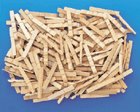
Students will organize to count more than 2000 small objects by performing groups in 10 followed by 100 and then by 1000. We can use matches, paper clips, cubes, sticks ice ...
References:
This situation is in "digital learning and solving problems" in team ERMEL Hatier volumes in PC (page 319) and CE1 (page 316)
worked Skills:
- counting and achieve quantities using counting one to one or groups and trade by tens and hundreds
- understand and value the figures according to their position in writing a decimal number
- produce oral and written sequences of numbers from 1 in 1, 10 10, 100 in 100
- involving numerical and verbal descriptions of numbers
procedure possible:
- gather students around the pile of objects: How many are there objects? How will we do to know how many there are?
- after any other attempts or parallel grouping of articles by 10 (in envelopes, with elastic ...)
- when all packages are made of 10 we repeat the question: How many he object?
- grouping objects by 100
- at this stage it is possible to count objects from 100 to 100, can be immediately or only later in the working groups by 1000
- Recovery of activity with a stock of additional objects (already grouped or not) that require to make new groupings
If students leave early in other groups as the groups by 10, we may at some point , stopwatch in hand, compare the time it takes to count two piles equivalents. The count of 10 to 10 is faster and more efficient. It is not about to let the students "invent" a system of numbers but of them into our system as it is. It is appropriate on this occasion to draw attention students about why the choice of grouping 10 in our numbering system.
Extension possible:
Treasure (CE1 ERMEL page 329): Each student is a treasure (made up of small objects called "chips") by lot numbers. He then holds a book of his treasure and organize so you always know how many chips it has. This activity will work in most of the operative technique with the addition of units, tens and hundreds materialized (ideal for "see" what happens with deductions).


0 comments:
Post a Comment